
JUNE NEWSLETTER
1. START THE RACE
Highlights from an Unforgettable Race Week
Last May, Da Nang welcomed thousands of domestic and international athletes to Southeast Asia's largest multisport festival. Spectacular performances, unforgettable finish-line moments, and the determination to push beyond personal limits came together to create an inspiring race week.
Take a look back at some of the most memorable moments in the highlight video below.
As the excitement of race week is still fresh, now is the perfect time to start preparing for your next challenge. In this month's newsletter, we'll share practical training tips and expert insights to help you build a stronger foundation for the races ahead.
2. SWIMMING CORNER
Are You Making One of These Three Common Open Water Swimming Mistakes?
Have you ever spent countless hours training in the pool, only to find yourself struggling to maintain your pace on race day in open water? In an article published by TRI247, swim coach Lucas David, a former British National Champion swimmer who now coaches professional triathletes, shared three common training mistakes he frequently observes, along with practical advice to help athletes translate their training into stronger race-day performances.
1. Not training with focus and specificity in open water
One of the most common mistakes athletes make is treating every open water swim as simply covering a set distance or swimming steadily for a set amount of time. In reality, race conditions are far more dynamic. Athletes need to practice fast starts to secure clear water, settle into their target race pace, make short surges to overtake other swimmers, sight efficiently, and adapt to changing conditions such as waves and currents. These are race-specific skills that should be practiced regularly, not just on race day.
Training Tip: Give every open water session a clear objective. Focus on race-specific skills such as fast starts to find clear water, holding your target race pace, or making short surges to pass other swimmers. The more closely your training reflects race conditions, the more prepared you'll be to perform at your best on race day.
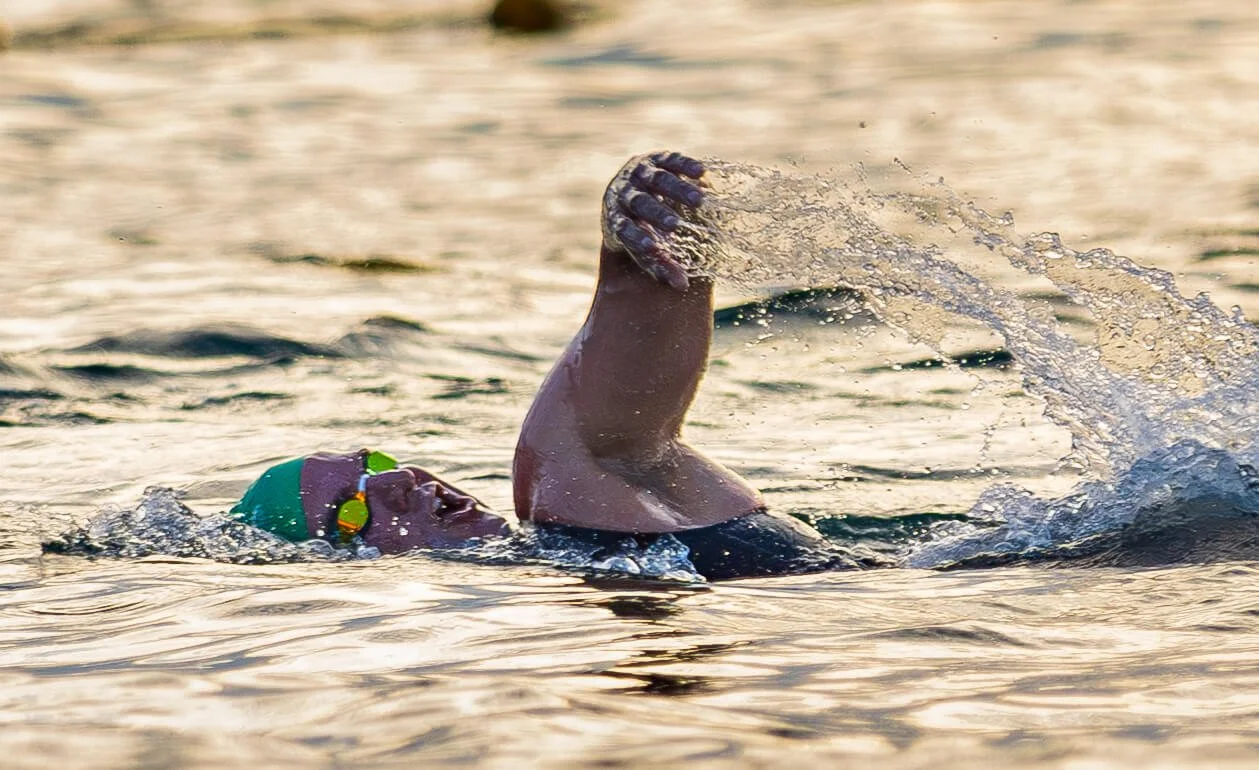
Photo caption: Train with a purpose every time you swim in open water.
Photo credit: Sunrise Events Vietnam.
2. Over rotating
When swimming in open water, excessive hip rotation can disrupt your stroke and compromise your body position. As a result, you'll use more energy and find it harder to maintain your swimming pace.
Training Tip: The key is to maintain a stable body position through proper technique. Practicing with a snorkel is an effective way to focus on body position and technique, helping you swim faster and more efficiently in open water.
3. Sighting too high in open water
Sighting is an essential skill in open water racing. However, lifting your head too high while looking ahead causes your hips and legs to sink, creating extra drag and wasting valuable energy.
Training Tip: Instead of lifting your entire head, raise your eyes just enough to spot your direction before quickly returning to your normal swimming position. Regular practice in the pool will help make this movement smoother and more efficient on race day.
KEY TAKEAWAY: Improving your open water swim isn't just about swimming farther, it's about training under race-like conditions, maintaining an efficient body position, and sighting effectively without sacrificing speed or efficiency.
3/ CYCLING CORNER
Why are you riding more but not getting faster?
Functional Threshold Power (FTP) is one of the most important metrics for measuring a cyclist's ability to sustain power over an extended period. Many athletes spend countless hours doing high-intensity workouts in the hope of increasing their FTP.
However, according to TRI247, improving your FTP isn't simply about riding harder. It depends on a balanced training approach that combines structured interval sessions, strength training, and a solid aerobic foundation. Let's explore three key elements that can help you build power more effectively and sustainably.
1. Don't just train hard - Train smart
Many athletes believe that increasing FTP requires constant high-intensity training. However, TRI247 highlights that structured interval workouts, such as Sweet Spot, Threshold, and VO₂ Max sessions, are far more effective for improving power output. Training at the right intensity, rather than pushing hard in every session, not only boosts FTP but also helps reduce the risk of overtraining.
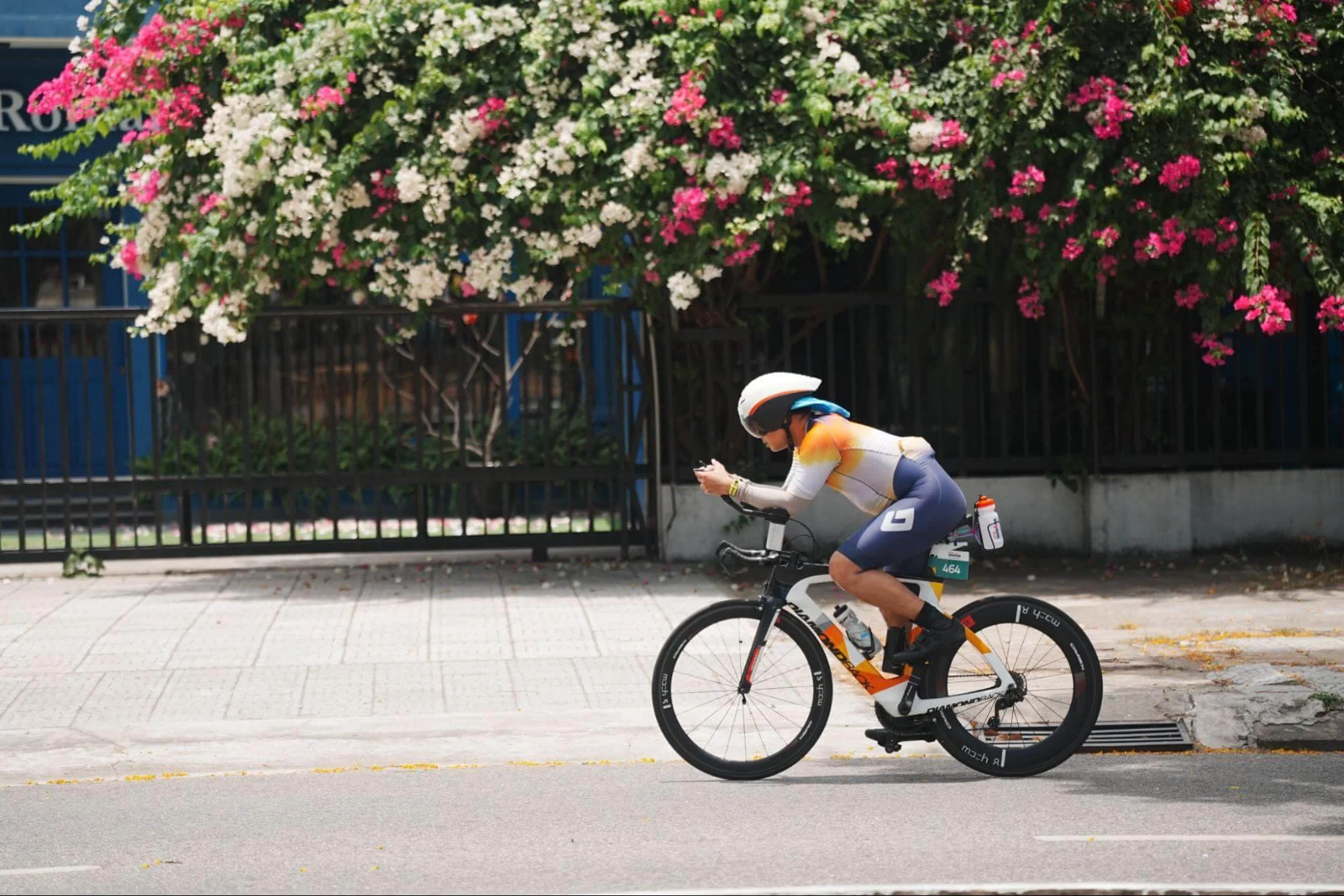
Well-structured training is more effective than constantly riding at high intensity.
Photo credit: Sunrise Events Vietnam.
2. Cycling alone isn't enough
Time on the bike is only part of the equation. Strength training, including exercises such as squats, weightlifting, and core workouts, plays a vital role in improving force production and maintaining stability on the bike. According to TRI247, these exercises help your body generate power more efficiently, sustain higher power output for longer, and ultimately improve race-day performance.
3. Don't overlook your Aerobic base
While interval workouts and strength training are essential for increasing cycling power, low to moderate-intensity rides are equally important. TRI247 explains that these rides help build aerobic endurance, improve recovery between harder workouts, and provide the foundation your body needs to adapt to more demanding training.
KEY TAKEAWAY: Improving your FTP isn't simply about training harder. A well-balanced program that combines structured interval training, strength work, and aerobic endurance will help you increase power more efficiently while reducing the risk of overtraining.
4/ RUNNING CORNER
Run stronger in the final leg of your triathlon
The run leg of a triathlon is vastly different from a standalone running race. By the time you leave T2, your body has already expended significant energy during the swim and bike segments. That's why efficient running technique is essential—not only to maximize performance, but also to manage your energy, maintain proper form, and keep a consistent pace even when fatigue sets in.
Here are four practical tips from TRI247 to help you run more efficiently and finish stronger in your next race.
1. Maintain efficient running form
According to TRI247, fatigue often causes athletes to bend at the waist, drop their shoulders, or tense their upper body, all of which waste valuable energy. To run more efficiently, focus on maintaining an upright posture, keeping your shoulders relaxed, and swinging your arms naturally. Good running form promotes better breathing, helps maintain a consistent cadence, and conserves energy throughout the run.
2. Avoid overstriding
One of the most common mistakes during the run leg is trying to lengthen your stride. In reality, maintaining a smooth cadence and allowing your feet to land naturally beneath your body is often far more efficient. This reduces stress on your joints, minimizes unnecessary energy expenditure, and helps you maintain your pace all the way to the finish line.
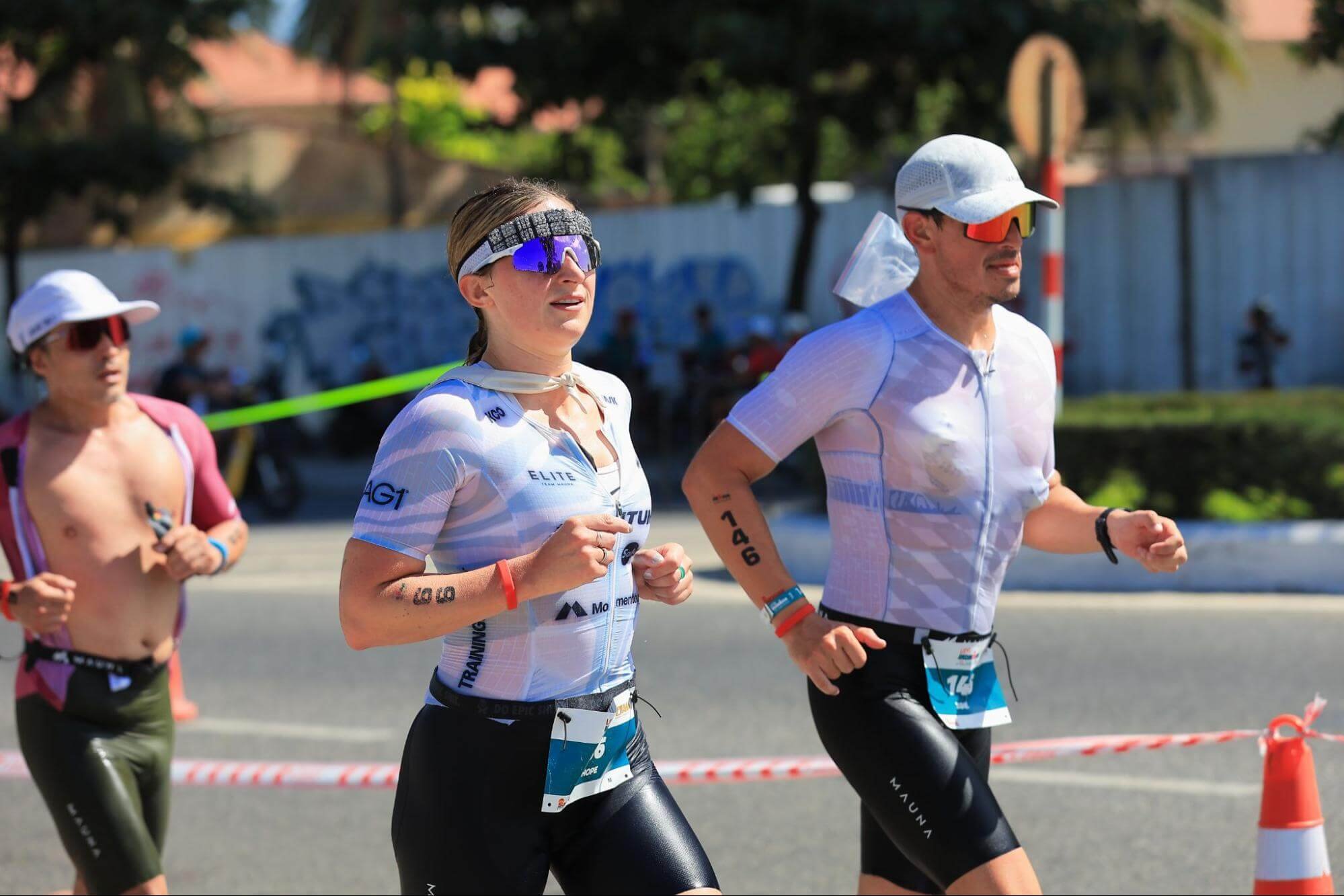
Focusing on proper technique and preparing well before race day can significantly improve your run performance.
Photo credit: Sunrise Events Vietnam.
3. Don't let your breathing slow you down
Breathing plays a vital role in maintaining consistency throughout the run. However, many athletes begin breathing too rapidly as fatigue builds, causing unnecessary tension and increased energy expenditure. Instead, focus on maintaining a steady, controlled breathing rhythm. This helps your body stay relaxed, improves pace control, and enables you to sustain your performance throughout the race.
4. Train specifically for race-day demands
Success on the run begins long before race day. Strength training, mobility work, bike-to-run brick workouts, and hip-strengthening exercises such as split squats and hip bridges help your body adapt to the fatigue that follows the bike leg. As a result, you'll maintain better posture, transition more smoothly from cycling to running, and perform more efficiently during the final leg of the race.
KEY TAKEAWAY: A strong run isn't determined by fitness alone—it also depends on sound technique and smart race preparation. Maintaining efficient running form, controlling your breathing, optimizing your stride, and following a well-structured training plan will help you conserve energy and perform at your best on race day.
5/ HELP SHAPE OUR NEXT RACE SEASON
Every race season is shaped not only by the courses we create but also by the valuable feedback and insights from our athlete community. As we explore the possibility of hosting a future IRONMAN race in Vietnam, we'd love to hear your thoughts on the ideal timing for the event.
Please take about 2 minutes to complete the survey below. Your feedback will serve as an important reference as we plan a race season that better meets the needs of our athlete community.
6/ WHAT WOULD YOU LIKE TO SEE NEXT?
We're committed to delivering content that truly supports and inspires our community. If there are topics you'd like us to cover in future newsletters, we'd love to hear from you.
Share your ideas through the form below and help us make future editions even more relevant and valuable for you.